sazz@webtherapia.com

Physical Therapy for Lower Back Pain: What Helps, What Doesn’t, and When to Get Evaluated

Physical Therapy for Lower Back Pain: What Helps, What Doesn’t, and When to Get Evaluated

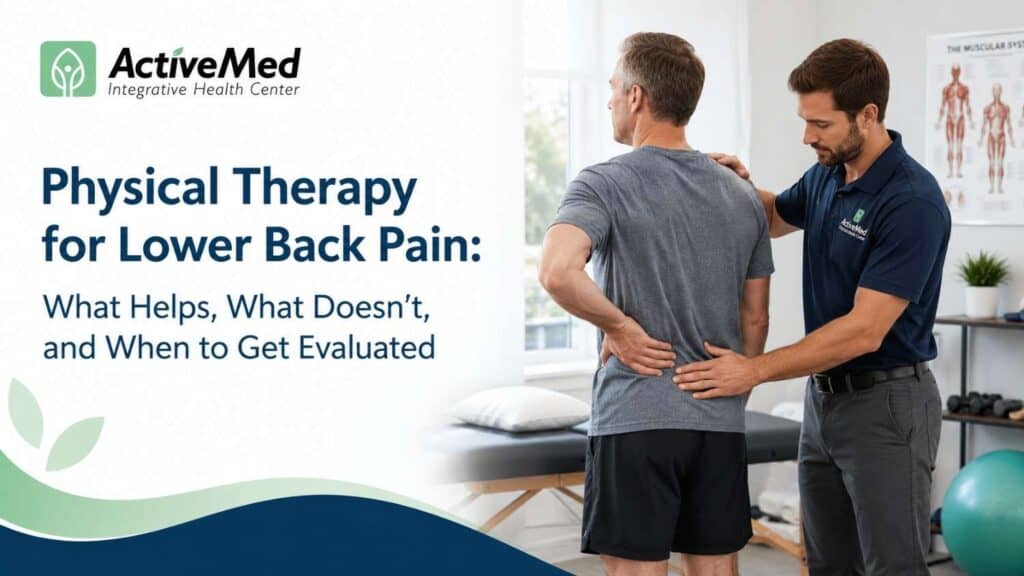
Physical therapy can help many people with lower back pain improve movement, strength, mobility, daily function, and confidence with activity. The most effective plans usually emphasize education, staying active as tolerated, individualized exercise, and gradual return to normal tasks—not prolonged bed rest or passive treatments alone. However, lower back pain associated with new weakness, bowel


Physical Therapy for Lower Back Pain: What Helps, What Doesn’t, and When to Get Evaluated Read More »

Medical Weight Loss vs Diet Programs: When Testing, Monitoring, and Follow-Up Matter

Medical Weight Loss vs Diet Programs: When Testing, Monitoring, and Follow-Up Matter

Medical weight loss and diet programs can both support weight-management goals, but they are not the same type of care. A quality diet program focuses on sustainable eating habits, physical activity, behavior change, accountability, and long-term maintenance. Medical weight loss adds clinical evaluation and follow-up when weight concerns overlap with health risks, medications, persistent symptoms,

Medical Weight Loss vs Diet Programs: When Testing, Monitoring, and Follow-Up Matter Read More »

GLP-1 Weight Loss Medications: Safety, Side Effects, and What Medical Supervision Should Include

GLP-1 Weight Loss Medications: Safety, Side Effects, and What Medical Supervision Should Include

GLP-1 weight loss medications may help some adults lose weight when they are prescribed appropriately and monitored by a qualified healthcare provider. They are not quick-fix cosmetic injections, and they are not safe for everyone. Side effects, medication interactions, nutrition changes, hydration, lab markers, muscle loss, and long-term maintenance all matter. This guide explains how

GLP-1 Weight Loss Medications: Safety, Side Effects, and What Medical Supervision Should Include Read More »

Can Physical Therapy Help Arthritis?

Can Physical Therapy Help Arthritis? | ActiveMed Health

Yes, physical therapy can help many people with arthritis move better, reduce stiffness, build joint-supporting strength, improve balance, and handle daily activities with more confidence. It does not cure arthritis or rebuild worn cartilage, but it can help reduce the way arthritis limits walking, stairs, standing, bending, gripping, and exercise. According to the CDC, physical

Can Physical Therapy Help Arthritis? | ActiveMed Health Read More »

What Is the Difference Between Integrative and Functional Medicine?

What Is the Difference Between Integrative and Functional Medicine?

If we strip away the buzzwords, the difference is clearer than most health blogs make it sound. According to the National Center for Complementary and Integrative Health, integrative health brings conventional and complementary approaches together in a coordinated, whole-person way. According to the Institute for Functional Medicine, functional medicine is a root-cause, systems-based framework that

What Is the Difference Between Integrative and Functional Medicine? Read More »

What Are the Signs You May Need Hormone Replacement Therapy?

What Are the Signs You May Need Hormone Replacement Therapy?

 If you are asking whether you may need hormone replacement therapy, the most useful place to start is this: persistent, disruptive symptoms matter more than vague “hormone imbalance” language. For women, the clearest signs are usually hot flashes, night sweats, sleep disruption, vaginal dryness, painful sex, urinary symptoms, and major quality-of-life changes during perimenopause or

What Are the Signs You May Need Hormone Replacement Therapy? Read More »

How Does Peptide Therapy Work? Mechanisms, Uses, Safety, and What to Expect

How Does Peptide Therapy Work? Mechanisms, Uses, Safety, and What to Expect

Peptide therapy works by using short chains of amino acids to influence specific signals in the body. Depending on the peptide, that may affect appetite, hormone signaling, metabolism, inflammation, or tissue repair. But “peptide therapy” is a broad category, not one single treatment. Some peptide-based medications are established and FDA-approved for specific conditions, while many

How Does Peptide Therapy Work? Mechanisms, Uses, Safety, and What to Expect Read More »

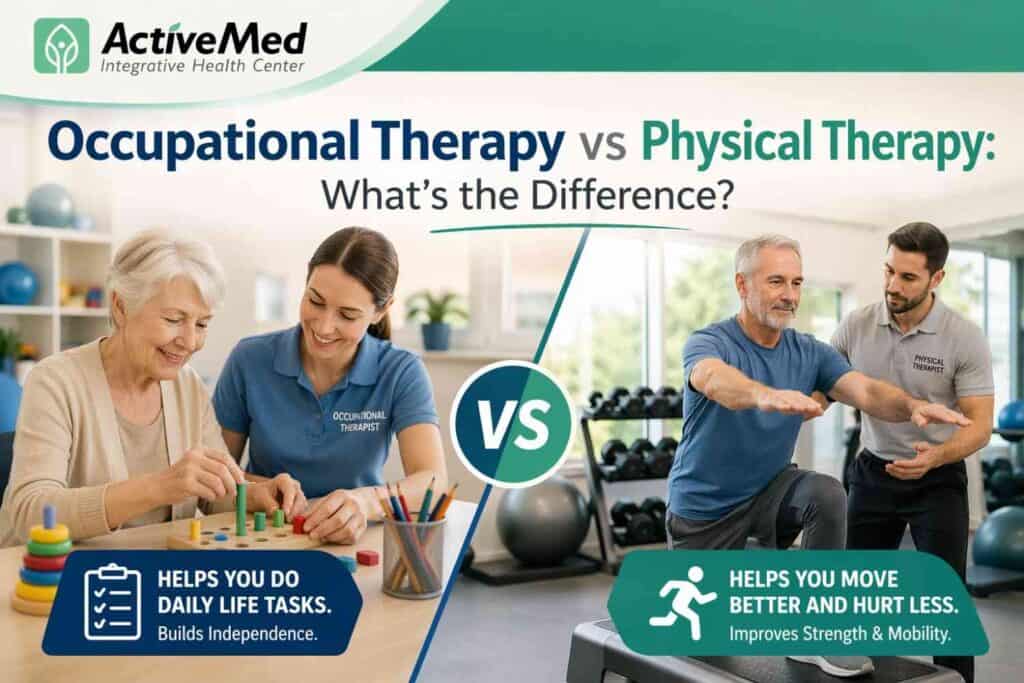
What Is the Difference Between Occupational Therapy and Physical Therapy?

What Is the Difference Between Occupational Therapy and Physical Therapy?

Occupational therapy and physical therapy both help people function better, but they do not do the same job. According to the American Occupational Therapy Association (AOTA), occupational therapy helps people participate in the everyday activities they need and want to do, including self-care, work, school, and home life. According to the American Physical Therapy Association

What Is the Difference Between Occupational Therapy and Physical Therapy? Read More »

Can Acupuncture Work for Weight Loss? What the Research Really Shows

Can Acupuncture Work for Weight Loss? What the Research Really Shows

 Yes, acupuncture may help with weight loss for some people, but it usually works best as a supportive tool, not a standalone solution. According to a 2025 systematic review and meta-analysis, acupuncture showed modest benefits for body weight compared with lifestyle intervention alone or placebo, but the authors rated the certainty of evidence as low

Can Acupuncture Work for Weight Loss? What the Research Really Shows Read More »

Axon Therapy vs Traditional Neuropathy Treatments: Medications, Injections, Implants, and mPNS Compared

Axon Therapy vs Traditional Neuropathy Treatments: Medications, Injections, Implants, and mPNS Compared

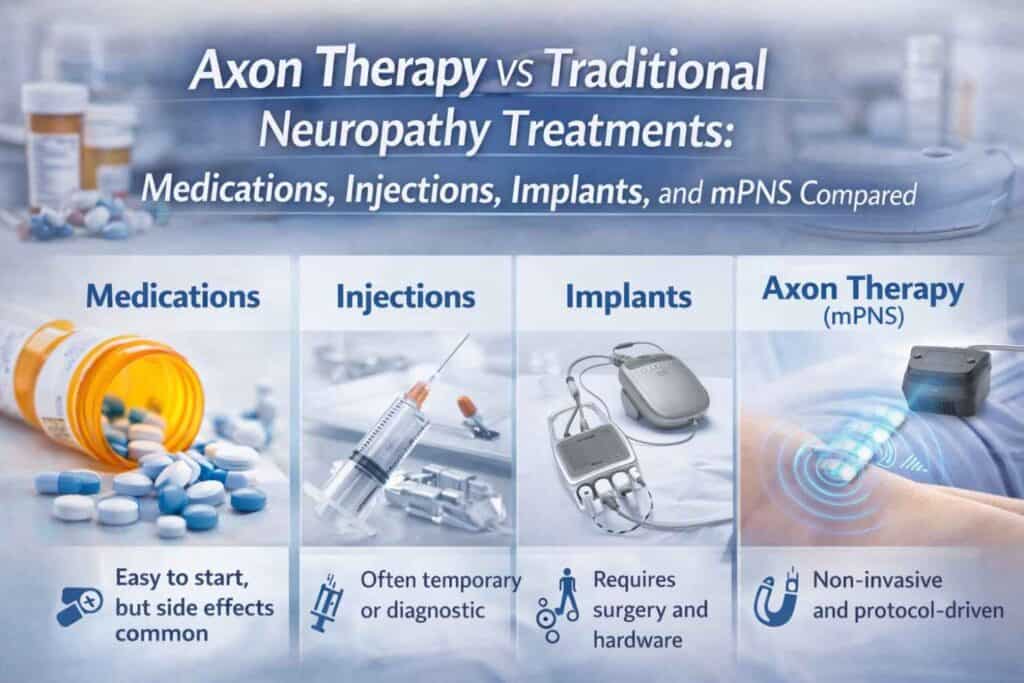
Neuropathy treatment is not one-size-fits-all. Medications are often the first step because they are guideline-supported and easy to start. Injections can help in select cases, but they are usually temporary or diagnostic rather than a true long-term plan. Implants such as spinal cord stimulators are more invasive and are usually reserved for harder, refractory cases.

Axon Therapy vs Traditional Neuropathy Treatments: Medications, Injections, Implants, and mPNS Compared Read More »

Scroll to Top