October 2026

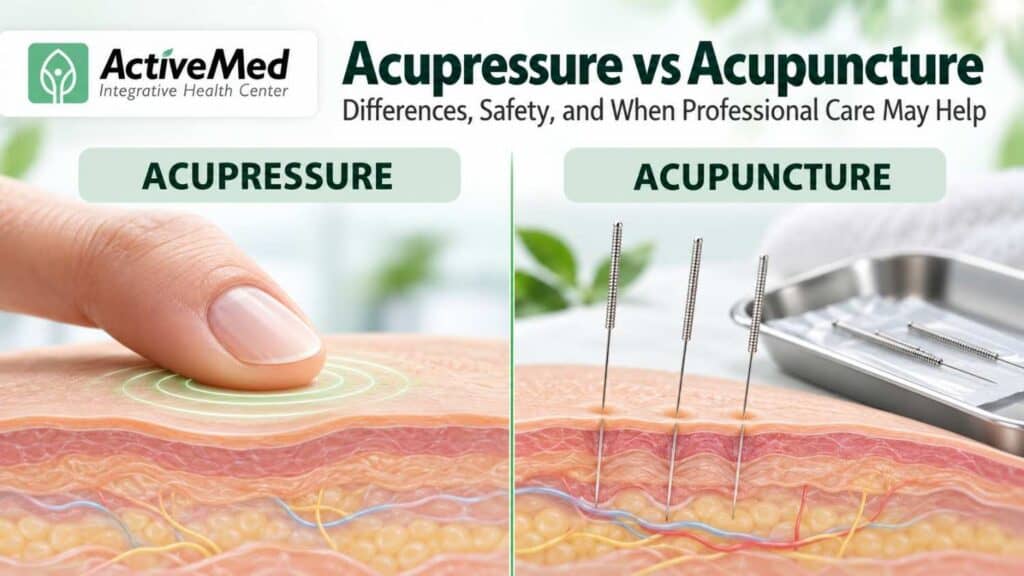
Acupressure vs Acupuncture: Differences, Safety, and When Professional Care May Help

Acupressure vs Acupuncture: Differences, Safety, and When Professional Care May Help

Acupressure applies pressure to selected points without piercing the skin. Acupuncture uses fine needles inserted by a qualified practitioner. The better next step depends on your symptoms, medical history, safety considerations and the evidence for your particular concern. Neither approach can diagnose the cause of pain or nausea, and neither should delay medical care when

Acupressure vs Acupuncture: Differences, Safety, and When Professional Care May Help Read More »

Peptide Therapy Consultation: Safety Questions, Clinical Context, and Follow-Up

Peptide Therapy Consultation: Safety Questions, Clinical Context, and Follow-Up

A peptide therapy consultation should identify the exact product being considered and the medical reason for considering it. It should also review your health history, the evidence and alternatives, possible risks, and a plan for follow-up. “Peptide therapy” alone does not tell you whether a product is FDA-approved, suitable for you, or effective for your

Peptide Therapy Consultation: Safety Questions, Clinical Context, and Follow-Up Read More »

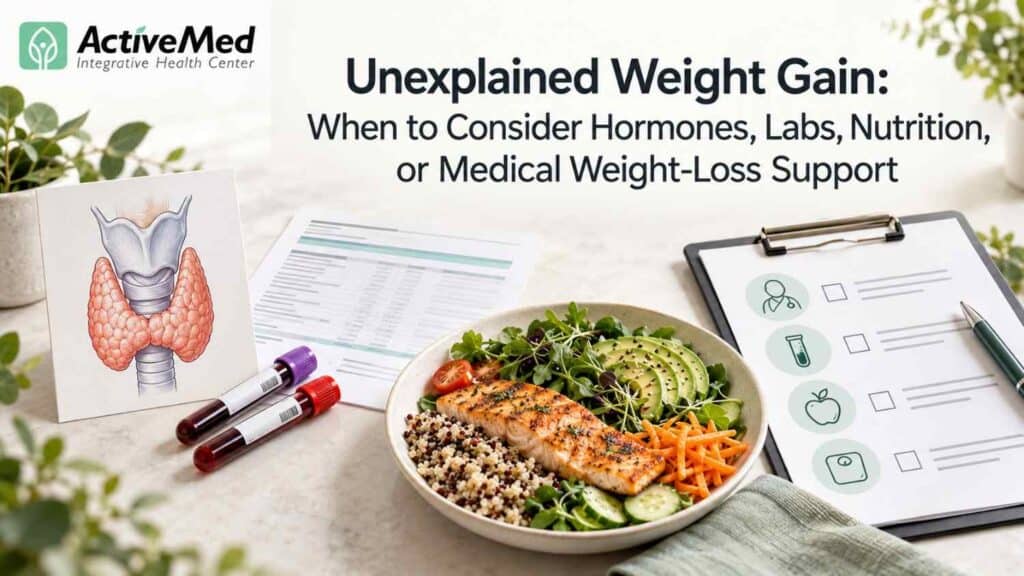
Unexplained Weight Gain: When to Consider Hormones, Labs, Nutrition, or Medical Weight-Loss Support

Unexplained Weight Gain: When to Consider Hormones, Labs, Nutrition, or Medical Weight-Loss Support

Unexplained weight gain deserves a closer look when it persists, changes quickly or comes with other symptoms. The first question is whether the change may involve body fat, fluid retention, pregnancy, bloating or another factor. Hormone tests, other labs, nutrition support and medical weight-loss care can each be useful in selected circumstances, but no single

Unexplained Weight Gain: When to Consider Hormones, Labs, Nutrition, or Medical Weight-Loss Support Read More »

Scroll to Top