blog

Inflammation Markers and Chronic Pain: What Lab Testing May Reveal

Inflammation Markers and Chronic Pain Lab Tests

Inflammation markers may show that inflammatory activity is present somewhere in the body, but they cannot identify the pain source or establish a diagnosis by themselves. Testing may be reasonable when chronic pain occurs with findings such as joint swelling, prolonged morning stiffness, fever or other systemic changes. The appropriate tests depend on the history,

Inflammation Markers and Chronic Pain Lab Tests Read More »

PRP for Tendon Pain: What It May Help, What It Cannot Promise, and Who Is a Candidate

PRP for Tendon Pain: What It May Help, What It Cannot Promise, and Who Is a Candidate

PRP may be considered for selected, properly diagnosed tendon conditions, particularly when pain and functional limitations persist despite appropriate conservative care. Results vary by the tendon involved, PRP preparation, comparison treatment and rehabilitation plan. PRP cannot guarantee tendon regeneration, pain relief, return to activity, a particular recovery timeline or avoidance of surgery. What Is PRP

PRP for Tendon Pain: What It May Help, What It Cannot Promise, and Who Is a Candidate Read More »

Fatigue and Brain Fog: When to Consider Labs, Hormones, Nutrition, or Functional Medicine

Fatigue and Brain Fog: When to Consider Labs, Hormones, Nutrition, or Functional Medicine

Persistent fatigue and brain fog may warrant clinical evaluation when they do not improve with adequate sleep, nutrition, hydration and recovery—or when they interfere with daily life. A provider can review your symptoms, health history, medications, sleep and diet before deciding whether targeted laboratory testing, hormone assessment, nutrition support, functional-medicine care or referral may be

Fatigue and Brain Fog: When to Consider Labs, Hormones, Nutrition, or Functional Medicine Read More »

Dry Needling vs Acupuncture: Differences, Similarities, and Which May Fit Your Pain

Dry Needling vs Acupuncture: Differences, Similarities, and Which May Fit Your Pain

Dry needling and acupuncture both use thin, solid needles inserted through the skin, but they differ in clinical framework, treatment targets, provider training and typical role in care. Dry needling is commonly used within musculoskeletal rehabilitation for selected muscle-related pain and movement limitations. Acupuncture comes from traditional East Asian medicine and may also be practiced

Dry Needling vs Acupuncture: Differences, Similarities, and Which May Fit Your Pain Read More »

Acupuncture for Neck Pain and Tension Headaches: What to Expect

Acupuncture for Neck Pain and Tension Headaches: What to Expect

Acupuncture may help some people manage neck pain and may reduce headache frequency in selected patients with frequent tension-type headaches, but results vary. An appointment typically includes a symptom history, safety screening, individualized treatment and reassessment. Screening matters because neck discomfort can accompany tension-type headache, migraine, cervicogenic headache, injury and other conditions. Seek urgent medical

Acupuncture for Neck Pain and Tension Headaches: What to Expect Read More »

Frozen Shoulder Treatment Options: PT, Acupuncture, PRP, and When to Get Evaluated

Frozen Shoulder Treatment Options: PT, Acupuncture, PRP, and When to Get Evaluated

Frozen shoulder, also called adhesive capsulitis, causes progressive shoulder pain and stiffness that can make dressing, sleeping, reaching overhead, or placing a hand behind the back difficult. Physical therapy is commonly used to improve motion and function, while acupuncture may be considered for supportive pain management. PRP is an emerging injection option, but evidence is

Frozen Shoulder Treatment Options: PT, Acupuncture, PRP, and When to Get Evaluated Read More »

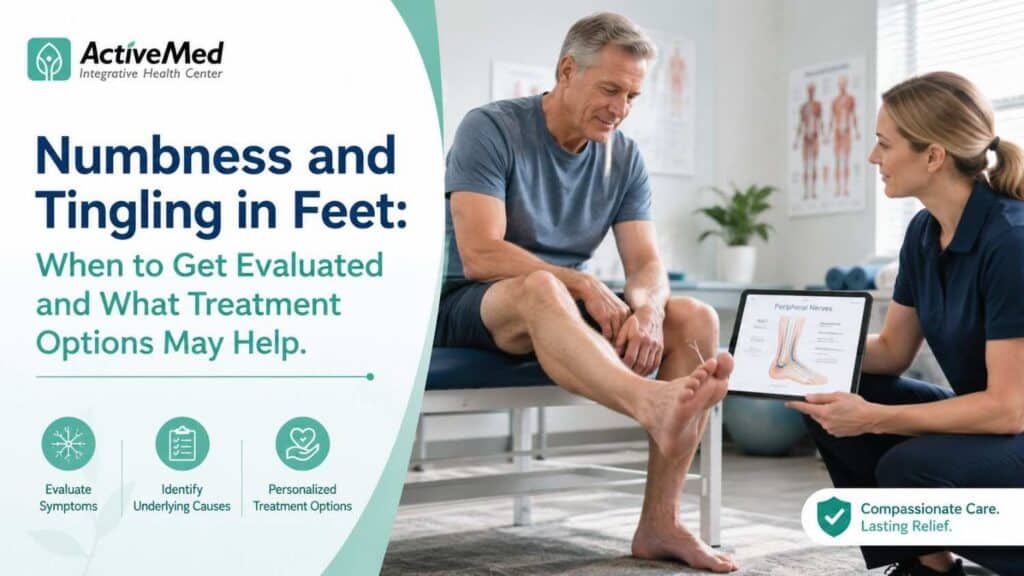
Numbness and Tingling in Feet: When to Get Evaluated and What Treatment Options May Help

Numbness and Tingling in Feet: When to Get Evaluated and What Treatment Options May Help

Numbness and tingling in the feet can come from temporary nerve pressure, peripheral neuropathy, diabetes, vitamin B12 deficiency, thyroid or kidney problems, medication effects, circulation issues, or spine-related nerve compression. Treatment depends on the cause. Some people need blood tests, foot-safety care, medication review, Physical Therapy, Pain Management, Acupuncture, or neuropathy-focused options such as Axon

Numbness and Tingling in Feet: When to Get Evaluated and What Treatment Options May Help Read More »

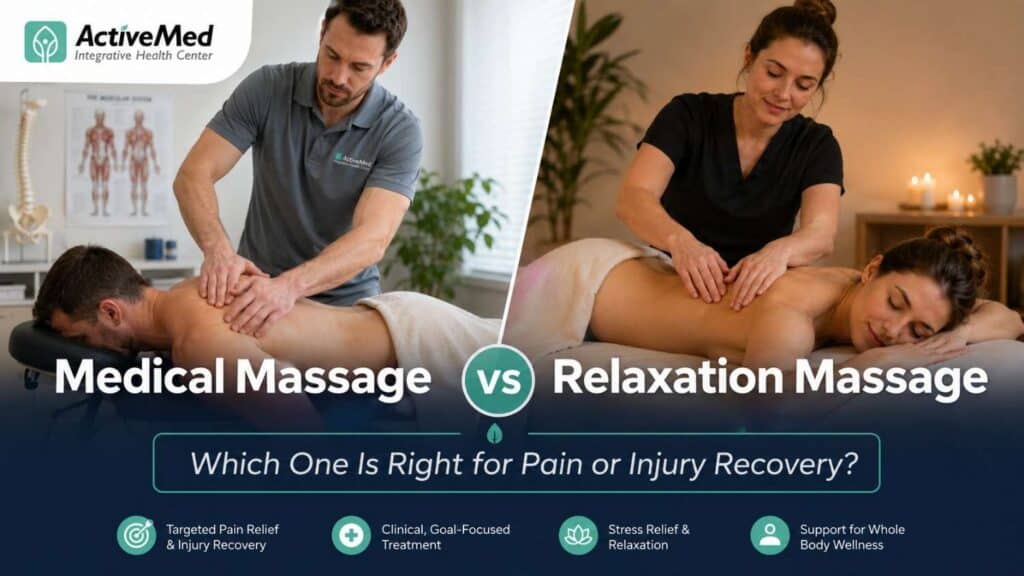
Medical Massage vs Relaxation Massage: Which One Is Right for Pain or Injury Recovery?

Medical Massage vs Relaxation Massage: Which One Is Right for Pain or Injury Recovery?

Medical massage and relaxation massage both use hands-on soft-tissue techniques, but they are designed for different goals. Relaxation massage is usually focused on stress reduction, general muscle tension, and wellness. Medical massage is more goal-specific and may be used for pain, muscle spasm, limited mobility, or injury recovery support as part of a broader care

Medical Massage vs Relaxation Massage: Which One Is Right for Pain or Injury Recovery? Read More »

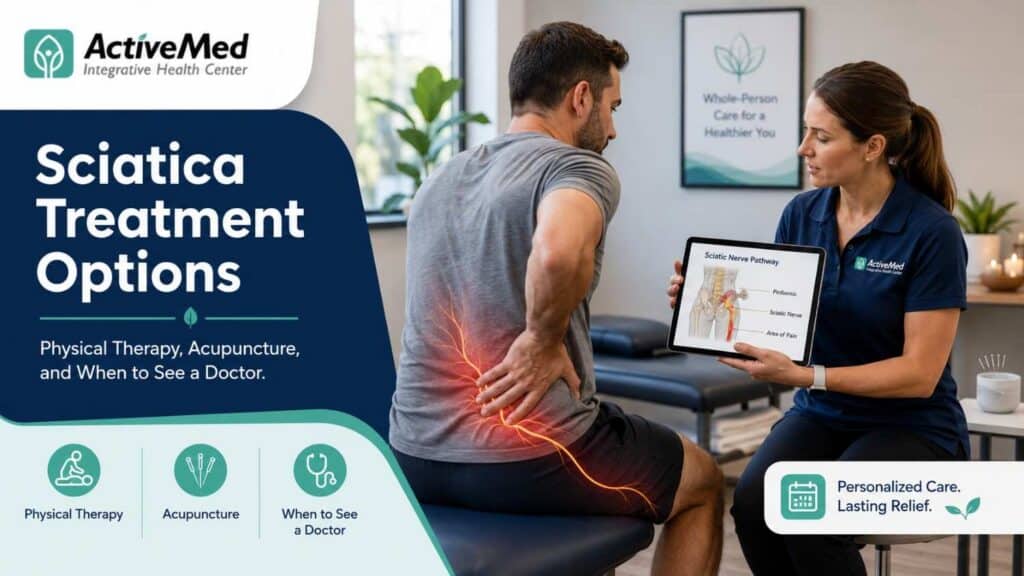
Sciatica Treatment Options: Physical Therapy, Acupuncture, and When to See a Doctor

Sciatica Treatment Options: Physical Therapy, Acupuncture, and When to See a Doctor

Sciatica treatment options may include staying active, guided exercise, Physical Therapy, Acupuncture, pain-management support, or specialist evaluation depending on the cause and severity of symptoms. Sciatica usually causes pain, tingling, numbness, or weakness that travels from the lower back or buttock into one leg. Seek urgent medical care for severe or worsening weakness, bilateral symptoms,

Sciatica Treatment Options: Physical Therapy, Acupuncture, and When to See a Doctor Read More »

Scroll to Top