
Outer hip pain when lying on your side can come from sensitive tendons or a nearby cushioning sac at the bony point of the hip. Changing sleep positions may ease the pressure, but the pain pattern alone doesn’t identify the cause. If pain keeps waking you, worsens, or limits walking or stairs, an evaluation can help determine what care makes sense.
Why Does the Outside of My Hip Hurt When I Lie on It?
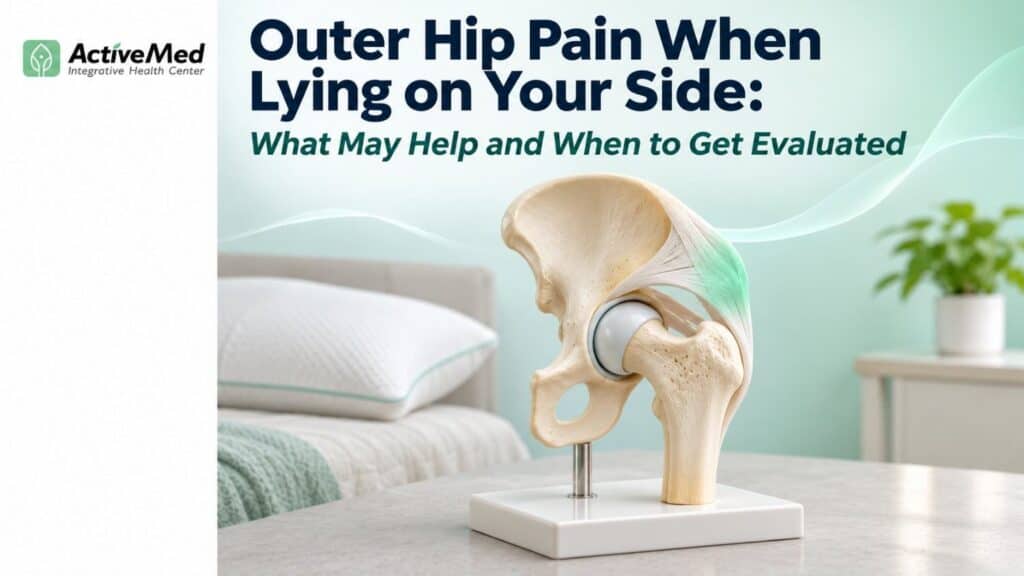
Lying on the painful side puts pressure on tissues around the greater trochanter, the bony bump at the top of the thighbone. If the tissues around that area are sensitive, the pressure from the mattress can make the hip ache. Stairs, longer walks, or standing on one leg can also bring on symptoms because those activities ask the muscles and tendons around the hip to work. 1
Clinicians use greater trochanteric pain syndrome, or GTPS, as an umbrella term for pain involving this area. If your hip starts to hurt when you roll onto it and eases when you change position, that’s useful information to share. It still doesn’t tell you which tissue is involved or whether something else is contributing.
Is Outer Hip Pain Always Bursitis?
No. Bursitis involves irritation of a small fluid-filled sac that cushions nearby tissues. Gluteal tendinopathy involves one or more tendons that attach muscles on the side of the pelvis to the upper thighbone. These tendons help keep the pelvis steady as you shift weight from one leg to the other. The nearby bursa and tendons can both contribute to symptoms, which is one reason the broader term GTPS is useful.
A clinician may also check the hip joint or lower back. For example, prominent groin pain or restricted hip motion can shift attention toward the hip joint. Back pain accompanied by tingling or numbness down the leg can make a lower back assessment more relevant. Pain from the outer hip can also spread into the thigh, so the location where you feel it is only part of the picture. ActiveMed’s sciatica evaluation guide explains why a clinician may look beyond the hip when nerve symptoms are present.
What May Help at Night and During the Day?
Start with a change that makes the hip more comfortable. If lying directly on it hurts, try lying on your back or on the other side, if comfortable. A pillow between your legs when you lie on your side can support the top leg and reduce how far it drops toward the mattress. The goal is to ease enough pressure to rest. There’s no requirement to hold one position all night. 1
During the day, notice which tasks reliably aggravate the pain. If a long walk leaves the hip more sore later, or repeated trips up the stairs don’t agree with it, tell your clinician what you did and how the hip responded. That can help you decide together what to adjust and what activity you can comfortably keep doing. A sleep position change may help you rest, but it doesn’t replace an evaluation if the problem keeps recurring or interfering with daily life.
What Can an Evaluation Check?
An evaluation can help identify where the symptoms may be coming from and what is limiting you. A clinician may ask you to point to the most painful spot, describe how the pain started, and explain what happens when you walk, climb stairs, or turn in bed. Depending on your symptoms, the exam may look at outer hip tenderness, walking, hip motion and strength, and whether the back or hip joint also needs attention.
| What you notice | What a clinician may check | What could change the plan |
| Pain over the outer hip when you lie on it | Where the hip is tender and which positions reproduce symptoms | A reassuring exam may support starting with comfort and activity adjustments. |
| Pain also limits walking or stairs | Hip strength, motion, and how you bear weight | Findings can help shape rehabilitation around the tasks that matter to you. |
| Pain continues despite an initial assessment and care plan | Whether the original explanation still fits and whether another source is likely | Further medical assessment or imaging may help if it would change care. |
| Severe pain after a fall, or inability to walk or bear weight | Whether a fracture or another serious injury is possible | Emergency evaluation takes priority. |
These rows are discussion cues. They do not establish a diagnosis or determine which test you need.
How May Physical Therapy Help?
When the assessment supports rehabilitation, physical therapy may help you build strength and improve how much activity the hip tolerates. A plan can combine education about which movements or positions aggravate symptoms with exercise that progresses according to the exam and your response. The starting point for someone who struggles with stairs may differ from that of someone who walks comfortably but wakes whenever they roll over. 1
In a randomized trial by Mellor and colleagues, adults with confirmed gluteal tendinopathy who received education and exercise reported better overall improvement at one year than those who received a corticosteroid injection. Pain scores at one year did not differ between those two groups. That distinction matters: how people rate their overall recovery and how much pain they report are different outcomes. The trial does not establish what will help every person with outer hip pain.
Set goals you can describe in everyday terms: walking farther before the ache starts, climbing stairs more comfortably, or waking less often when you turn in bed. Those details give you and your therapist something specific to revisit as the plan changes.
When May Imaging Change the Plan?
Imaging may help when the clinician has a specific question that would change care. When imaging is indicated for chronic hip pain, X-rays of the hip and pelvis are usually the first studies. If those images don’t explain the symptoms and the exam still suggests a tendon or bursa problem, diagnostic ultrasound or MRI without contrast may be appropriate. Neither is an automatic next step just because pain continues.
A new injury follows a different pathway. If a clinician suspects a fracture after a fall, X-rays are usually the first test. If they are negative but concern for a fracture remains, the treating team may use MRI or CT to look further. Severe pain after a fall or an inability to bear weight should be assessed right away rather than waiting for an outpatient scan or physical therapy appointment.
If you’re unsure why a scan is being considered, ask: What are we trying to find, and how would the result change my care? ActiveMed’s guide to when an MRI may be needed before physical therapy explains how that decision can differ across injuries and body areas.
When Should You Get Hip Pain Checked?
Arrange a medical assessment if your pain persists, worsens, keeps interrupting sleep, or limits your usual activities. It helps to tell the clinician whether the pain started after an injury and whether it changes with position or weight bearing. 5
- Seek urgent medical assessment if the hip is hot and swollen and you have a fever, or if severe hip pain starts suddenly without an injury.
- Seek emergency evaluation if you have severe hip pain after a fall or injury, or if you cannot walk or bear weight.
ActiveMed is not an emergency-care provider. Do not wait for a clinic appointment if you have emergency symptoms.
Frequently Asked Questions
Is outer hip pain when lying down always bursitis?
No. The gluteal tendons, the nearby bursa, or both can contribute to outer hip pain. How the pain behaves and what the clinician finds on examination help guide the assessment.
Can a pillow between my knees help?
It may make lying on your side more comfortable by supporting the top leg. If lying on the painful hip still bothers you, try another comfortable position rather than relying on the pillow alone.
Why does the same hip hurt on stairs?
Climbing stairs asks the muscles and tendons around the hip to help steady the pelvis as you step up. Pain on stairs is a clue worth sharing, especially if the same spot hurts when you lie on it.
Do I need an MRI for outer hip pain?
Not necessarily. If imaging is indicated for ongoing hip pain, X-rays usually come first. A clinician may consider ultrasound or MRI when the exam points to a tendon or bursa problem and further imaging would help guide care.
Should I get evaluated if the pain only happens in bed?
Yes, if it keeps interrupting your sleep, persists, or is getting worse. Tell the clinician whether changing positions relieves the pain and whether you also notice symptoms when walking or climbing stairs.
How May ActiveMed Help?
For nonurgent symptoms, ActiveMed’s physical therapy services can help you discuss whether rehabilitation is appropriate for the activities your hip pain limits. If it still interferes with sleep, walking, or stairs, you can request an evaluation with ActiveMed. Bring any prior reports and a short note about what brings on the pain, what eases it, and what you’d like to do more comfortably.