
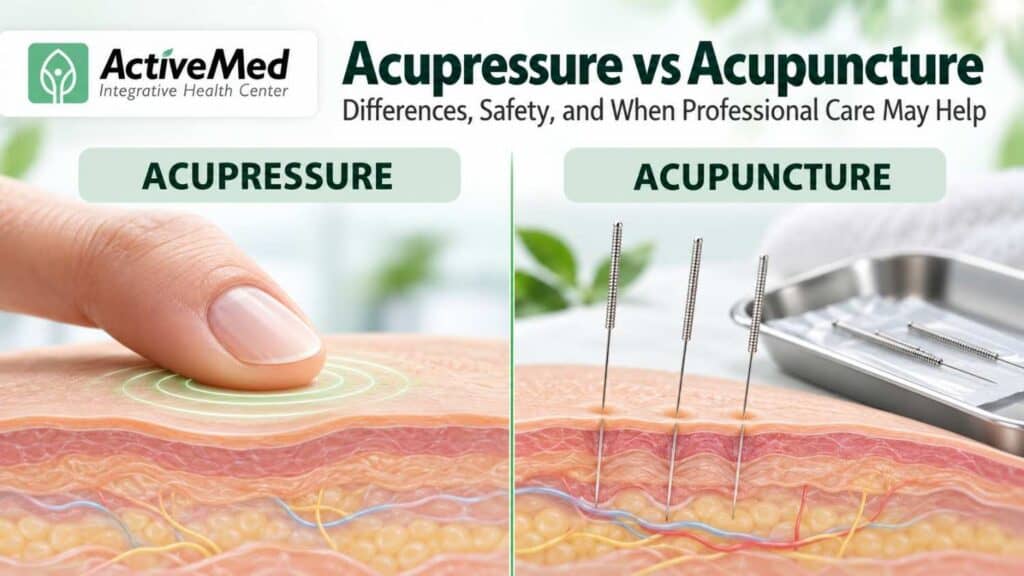
Acupressure applies pressure to selected points without piercing the skin. Acupuncture uses fine needles inserted by a qualified practitioner. The better next step depends on your symptoms, medical history, safety considerations and the evidence for your particular concern. Neither approach can diagnose the cause of pain or nausea, and neither should delay medical care when it is needed.
What Is the Difference Between Acupressure and Acupuncture?
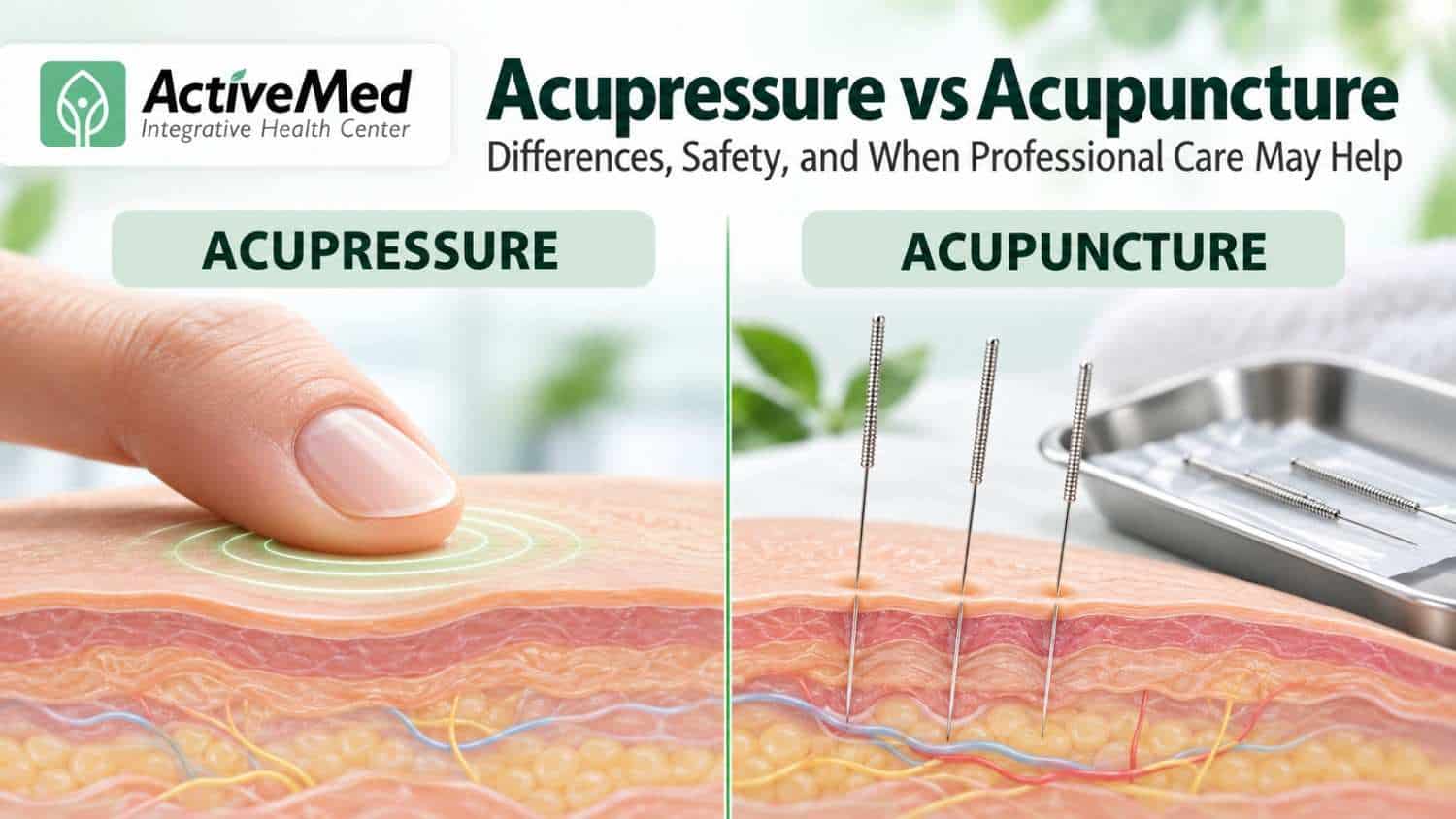
The main difference is how the points are stimulated: acupressure uses touch, while acupuncture uses needles that enter the skin. Some acupressure techniques can be used as self-care; acupuncture requires an appropriately qualified practitioner. Their risks and research findings differ, so results with one approach should not be assumed for the other.
| Factor | Acupressure | Acupuncture |
| How it is delivered | Pressure on selected areas, often with fingers or a device | Fine needles placed at selected sites |
| Skin penetration | None | Yes |
| Self-care or professional care | May be used as self-care with suitable guidance | Performed by an appropriately qualified practitioner |
| Evidence | Studied for specific concerns, including chronic low-back pain and wrist-point stimulation for postoperative nausea | Studied for selected pain conditions and other symptoms |
| Main safety considerations | Avoid painful pressure and damaged or inflamed skin | Requires sterile, single-use needles and proper technique |
| Clinical limitation | Does not identify why a symptom is occurring | Does not replace diagnosis or necessary treatment |
How Do Acupressure and Acupuncture Relate?
Both approaches grew from traditions that describe selected body points and pathways. Those traditional concepts provide historical context; they do not establish that each point has a proven, organ-specific anatomical effect. Modern research studies particular techniques and symptoms, while the mechanisms behind acupuncture’s effects remain incompletely understood.
The shared terminology can be confusing. Pressing a point and inserting a needle at a point are different interventions. Even when studies address a similar symptom, their findings cannot automatically be transferred between techniques, clinical settings or patient groups.
What Does the Evidence Say for Pain and Other Symptoms?
Evidence depends on the condition and technique studied. Acupuncture may help some people with back or neck pain and knee osteoarthritis pain. Acupressure has a smaller research base for chronic low-back pain. Wrist-point stimulation has been studied for nausea after surgery. None of these findings establishes a universal treatment for pain or nausea.
| Condition or setting | What has been studied | What the finding does not prove |
| Selected back or neck pain and knee osteoarthritis pain | Acupuncture has shown possible symptom benefit, although comparisons with simulated treatment often show smaller differences than comparisons with no treatment. | It does not identify the cause of pain or guarantee relief. |
| Chronic low-back pain | A review included six acupressure trials with 468 adults and reported improvements in treatment groups. | It does not show that acupressure is as effective as acupuncture for every person or pain condition. |
| Nausea and vomiting after surgery | A Cochrane review found that invasive or noninvasive wrist PC6 stimulation combined with anti-nausea medication may reduce postoperative symptoms versus simulated treatment. | It does not establish effectiveness for motion sickness, every cause of nausea or general pain. |
For a closer look at a specific pain concern, see our article on acupuncture for neck pain and tension headaches. Pain and nausea are symptoms; an evaluation may still be necessary to understand what is producing them.
Is Acupressure Safer Because It Does Not Use Needles?
Acupressure avoids risks associated with puncturing the skin, but that does not make every application appropriate. Pressure should not be painful or applied over an open wound, rash, peeling or irritated skin, or an area that is red, warm or swollen. Persistent or worsening symptoms call for assessment rather than stronger pressure.
Pregnancy, a significant health condition or uncertainty about a symptom warrants individualized guidance. A technique that feels comfortable for one person may be unsuitable for another, and avoiding needles does not remove the need to investigate concerning symptoms.
What Are the Risks of Acupuncture?
Acupuncture can cause temporary soreness, slight bleeding or bruising. Serious complications are uncommon but can occur when needles are nonsterile or treatment is delivered improperly; reported harms include infection and injury to internal structures. Needles must be sterile and single-use, and the practitioner must be appropriately qualified.
Tell the practitioner about pregnancy, relevant medical conditions, medications and prior reactions before treatment. In California, patients can check an acupuncturist’s license status with the California Acupuncture Board; other licensed professionals may practice acupuncture within their permitted scope.
Can You Use Acupressure as Self-Care?
Some acupressure can be used as self-care when the symptom has been appropriately assessed and the method is comfortable. It should be a possible addition to a care plan, not a way to diagnose yourself or postpone needed treatment. Memorial Sloan Kettering describes a wrist-point technique for nausea while advising against pressure on damaged or inflamed skin.
There is no universal point selection or pressure duration that fits every symptom. Stop if pressure hurts, and seek guidance if symptoms persist, change or interfere with daily activities. Do not stop or change prescribed medication because you are trying acupressure.
What May a Professional Acupuncture Evaluation Add?
A professional evaluation can put symptoms in context before any needling is considered. A practitioner may ask about the pain pattern, onset, medical history, medications, daily limitations and previous care, then discuss realistic goals and whether acupuncture is appropriate. It should also identify symptoms that need conventional medical assessment or referral.
Patients can ask about qualifications, sterile single-use needles, expected risks and how progress will be assessed. An evaluation cannot promise a particular result, and the number of visits should depend on the individual clinical picture rather than a universal schedule.
When Might Another Type of Care Be More Appropriate?
Another form of care may be the better first step when the cause of pain is unclear, symptoms are changing, or movement and strength are substantially affected. Depending on the findings, a medical examination, indicated imaging or physical therapy may address a concern that pressure or needling alone cannot resolve.
Acupuncture or acupressure may sometimes accompany other care. They should not replace treatment for an injury or illness that requires a different approach. The useful question is what the symptom evaluation shows, rather than which technique sounds more appealing.
When Do Symptoms Need Prompt Medical Evaluation?
Seek urgent or emergency assessment for a sudden severe headache, new weakness or numbness, chest pain, breathing difficulty, fever with severe symptoms, or severe pain after an injury. These symptoms may require time-sensitive evaluation. Do not try acupressure or wait for an acupuncture visit to see whether they improve.
Other rapidly worsening or unusual symptoms also deserve timely medical advice. ActiveMed is not an emergency-care provider. If you may be experiencing an emergency, call emergency services or go to an appropriate emergency department.
How May ActiveMed Help?
ActiveMed Integrative Health Center serves adults in Encinitas, Poway and San Diego. We offer acupuncture services and pain-management support. An evaluation can help clarify your goals, identify concerns that warrant other care and discuss whether acupuncture belongs in your broader plan.
We do not assume that acupuncture is right for every symptom or that ActiveMed provides a specific acupressure program. If coverage matters to your decision, you can verify your insurance benefits before proceeding; benefits depend on your plan.
Frequently Asked Questions
The choice between acupressure and acupuncture depends on the symptom, safety considerations and what the available research actually studied. These answers address common questions, but they cannot determine the cause of an individual’s pain or nausea. We recommend an evaluation when symptoms persist, change or limit normal activities.
What is the main difference between acupressure and acupuncture?
Acupressure stimulates selected points through pressure without breaking the skin; acupuncture uses fine needles inserted by a qualified practitioner. We consider them distinct approaches even though they share some traditional terminology. Their practical risks differ, and research supporting one technique for a particular symptom does not automatically establish the same result for the other.
Is acupressure as effective as acupuncture for pain?
We cannot say that acupressure is equally effective for pain in general. Acupuncture has been studied for several specific pain conditions, while a smaller body of acupressure research includes chronic low-back pain. Direct, reliable comparisons across different diagnoses are insufficient for a blanket ranking. The condition, goals and other needed care matter more than a general claim of superiority.
Does acupressure hurt?
Acupressure should not be painful. Some pressure may feel noticeable or mildly tender, but pain is a reason to stop rather than press harder. We would avoid applying pressure to a wound or an area that is irritated, red, warm or swollen. If a painful area is unexplained or worsening, have it assessed instead of repeatedly pressing it.
Is acupuncture safe when performed by a qualified practitioner?
Acupuncture is generally considered safer when performed with proper technique and sterile, single-use needles, though no procedure is risk-free. Minor soreness or bruising can occur; serious complications have been associated with improper practice. We encourage patients to discuss relevant conditions and medications and to check a practitioner’s qualifications. We cannot guarantee an individual experience or outcome.
Can you use acupressure at home?
Some people use acupressure at home after receiving suitable guidance. We would first consider whether the symptom has been appropriately evaluated and whether the skin is healthy and pressure feels comfortable. Home use is a complement to care, not a substitute for investigating persistent pain, significant nausea or new symptoms. It should never be used to delay urgent assessment.
Should you choose acupuncture for persistent pain?
Persistent pain is a reason to seek an evaluation, not an automatic reason to choose acupuncture. We would want to understand its location, duration, effects on daily life and any warning signs before discussing options. Acupuncture may be considered for certain pain conditions, sometimes alongside rehabilitation or medical care, but it cannot identify or resolve every underlying cause.
Is acupressure the same as dry needling?
No. Acupressure uses pressure without piercing the skin, while dry needling uses needles. Acupuncture also uses needles, but the assessment frameworks and clinical aims may differ. For a more relevant needle-based comparison, read our guide to dry needling versus acupuncture for pain. A clinician can explain which approach, if any, fits your evaluated concern.
When should you seek medical care instead of trying either approach?
Seek emergency care for chest pain, breathing difficulty, new weakness or numbness, or a sudden severe headache. Severe pain after injury or fever with severe symptoms also needs prompt assessment. We recommend medical evaluation for symptoms that persist, worsen or disrupt normal function. Neither acupressure nor acupuncture should be used to wait out a potentially serious problem.