
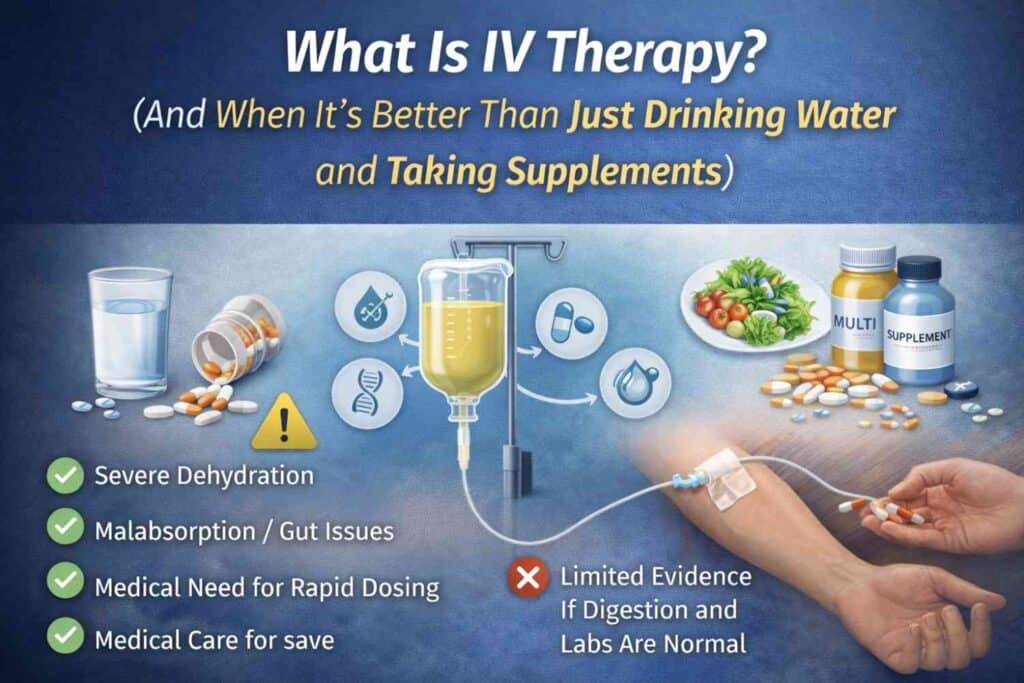
IV therapy (intravenous therapy) means putting fluids, electrolytes, and nutrients directly into your bloodstream through a small tube in a vein. It’s essential in hospitals for dehydration, surgery, medications, and chemo. In wellness and integrative clinics, IV “drips” are also used for hydration, nutrient support, and symptom relief.
If your digestion and absorption are normal, water + food + oral supplements are usually enough. Major medical sources say there’s little evidence that IV vitamin drips improve health in already well-nourished people, and they warn that unnecessary infusions add risk (infection, vein problems, fluid overload, electrolyte issues).
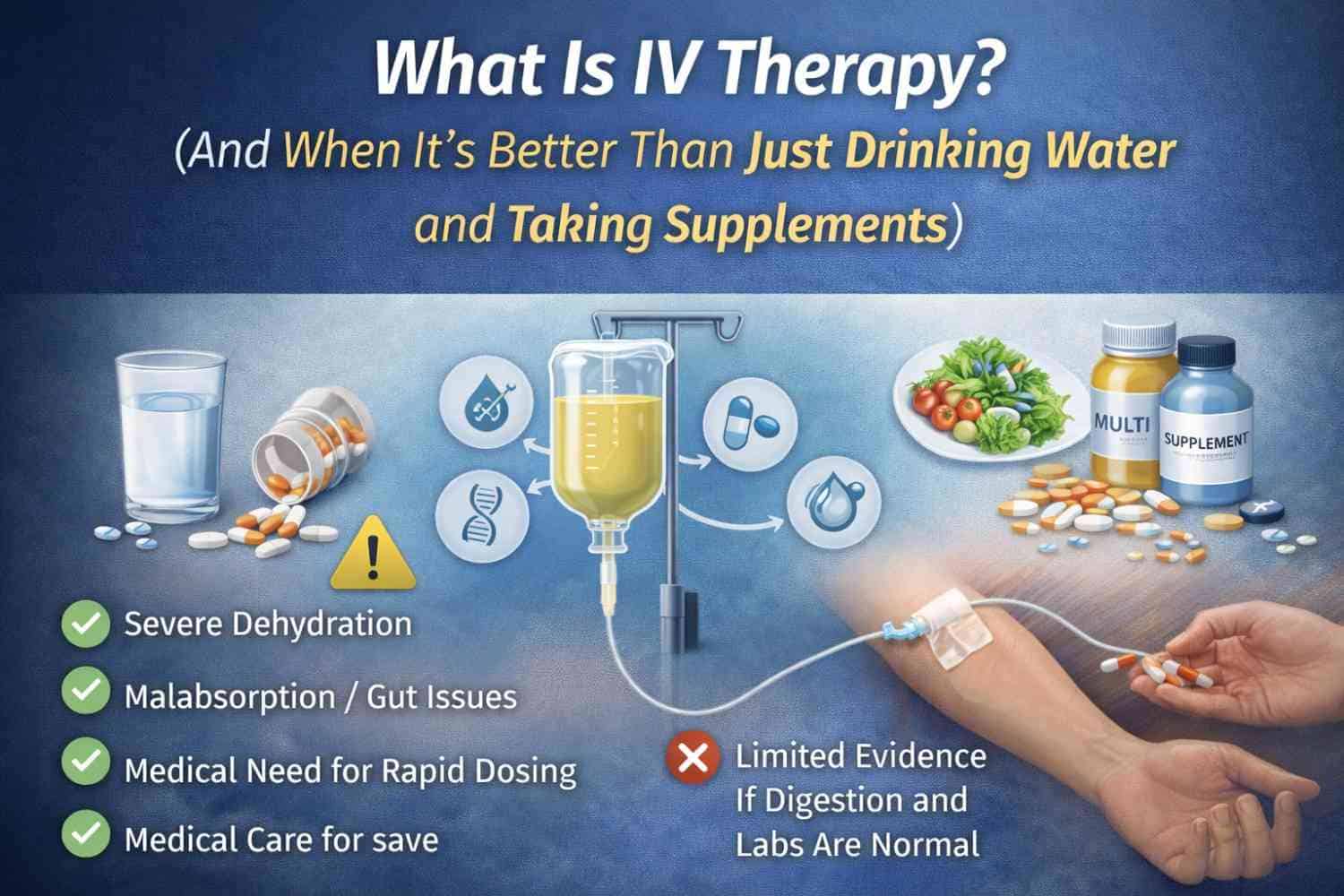
IV therapy is clearly more appropriate when you have:
- Severe dehydration or can’t keep fluids/meds down
- Malabsorption or gut disease (e.g., post-bariatric surgery, IBD) causing proven nutrient deficiencies
- A medical need for fast, controlled dosing (hospital-level care)
At ActiveMed Integrative Health Center in Encinitas, Poway, and San Diego, IV nutrient therapy is used as a targeted tool inside a larger plan (functional medicine, acupuncture, physical therapy, Axon Therapy for neuropathy, etc.)—not as a magic shortcut.
What is IV therapy, in plain language?
IV therapy = delivering fluids, medications, or nutrients directly into a vein so they go straight into the bloodstream instead of passing through your digestive system.
Two big buckets:
- Medical IV therapy (standard medicine)
- Used in hospitals and clinics for:
- Dehydration
- Surgery and anesthesia
- Antibiotics, chemo, pain meds
- Electrolyte correction and nutrition when people can’t eat
- Used in hospitals and clinics for:
- Wellness / nutrient IV therapy
- “Myers’ Cocktail”-style drips with vitamins, minerals, and fluids
- Marketed for energy, immune support, “detox,” hangovers, and performance
- Popular in med-spas and drip bars, but high-quality evidence for these claims is limited
At ActiveMed, IV therapy stays on the medical side of the line: used when there’s a clear clinical rationale (e.g., significant fatigue, gut issues, suspected or documented deficiencies) and always under physician supervision—not as a casual wellness fad.
Read more: Vitamin IV Therapy Boosts Wellness
What’s actually in an IV nutrient drip?
Formulas vary by clinic, but most “nutrient” IVs are riffs on the classic Myers’ Cocktail:
- B vitamins (B1, B2, B3, B5, B6, B12)
- Vitamin C (often in high doses)
- Minerals like magnesium and calcium
- Sometimes trace minerals, amino acids, and additional antioxidants
Common wellness-style IV categories:
- Hydration / “Nourish”-type drips – fluids, electrolytes, B vitamins, vitamin C, magnesium
- Immunity drips – above + higher vitamin C and zinc
- “Detox” drips – nutrient base + glutathione as an antioxidant support
- NAD+ drips – nicotinamide adenine dinucleotide, a coenzyme involved in energy metabolism and DNA repair, positioned for “cellular energy” and anti-aging, though human evidence is still early and mixed
The key point: what’s in the bag should match a real need, not just a trendy label.
When is IV therapy actually better than water and supplements?
This is the core question behind the title. There are specific scenarios where IV wins clearly.
1. When you can’t keep anything down
If you’re:
- Vomiting repeatedly
- Having severe diarrhea
- Recovering from GI infections or surgery and can’t tolerate oral intake
…oral fluids and supplements often just come right back up.
In those cases, IV fluids and electrolytes are standard of care in medical settings because they rapidly restore hydration and salt balance when the gut isn’t cooperating.
2. When your gut can’t absorb nutrients properly
Conditions like:
- Inflammatory bowel disease (IBD)
- Celiac disease with significant damage
- Short-gut or major intestinal surgery
- Some post-bariatric surgery states
…can severely reduce nutrient absorption.
Reviews of IV vitamin therapy note that the clearest evidence for its benefit is in patients with real malabsorption or documented deficiencies, where oral supplementation fails.
Examples:
- IV iron for severe iron deficiency when oral iron is not tolerated
- IV B12 when intrinsic factor is lacking or injections/IV are preferred
- IV magnesium in certain cardiac or severe deficiency states
In those situations, IV isn’t a luxury—it’s a medically appropriate route.
3. When you need rapid, controlled dosing
In hospitals and urgent care, IV is used when:
- You need medications (antibiotics, pain meds, chemo) delivered in a controlled, titratable way
- You’re significantly dehydrated and oral fluids would be too slow
- You require precise electrolyte correction
Here, IV is chosen because speed and control matter, not because it’s trendy.
4. When bloodwork shows deficiencies despite doing “everything right”
Some people:
- Eat well
- Take oral supplements
- Still test low on specific nutrients (e.g., B12, iron, magnesium)
Often this is due to subtle absorption issues, medications, or chronic illness. In these select cases, a clinician might use IV therapy to replete levels more predictably, then shift back to diet + oral support.
At ActiveMed, this is a test-don’t-guess situation: you’d typically see lab-guided recommendations, not random “drip of the month”.
Read more: IV Therapy Side Effects To Know
When is water + food + supplements enough (and IV is overkill)?
For most generally healthy people, basic hydration and nutrition win. Major medical sources say exactly that.
Here’s a simple comparison:
| Situation | Best first-line approach | Why IV is usually not needed |
| Mild dehydration from exercise, heat, or daily life | Oral fluids with electrolytes (water, broths, ORS, light sports drinks) | Your gut absorbs water and salts well; IV adds cost and puncture risk without extra benefit. |
| Normal digestion, no proven deficiencies | Balanced diet + possibly an oral multivitamin | Authorities like Mayo Clinic Press and the Merck Manual say there’s little evidence IV vitamins help people with adequate intake. |
| Hangover, feeling “run down” | Fluids, sleep, food, time; maybe oral electrolytes | Some people feel better after IVs, but research doesn’t show clear long-term advantage over standard hydration/rest. |
| “Glow,” “detox,” or performance boosts in otherwise healthy adults | Sleep, nutrition, stress management, training plan, targeted oral supplements | Reviews and consumer guidelines say claimed benefits of wellness IVs in non-deficient people are mostly anecdotal. |
So if your digestion is fine and your labs look good, IV therapy is best viewed as an optional add-on, not a basic need.
What does science say about IV vitamin & “wellness” drips?
A few clear themes show up across serious reviews:
Evidence is strong for deficiency treatment, weak for general wellness
- IV vitamin and mineral therapy is evidence-based for specific deficiencies and medical conditions (e.g., IV iron, IV B12, magnesium in certain heart rhythm issues).
- For Myers’ Cocktail-style multivitamin drips in non-deficient people, high-quality trials are scarce, often small, and often show no clear benefit over placebo.
Major medical organizations are skeptical of routine wellness IVs
- Mayo Clinic Press: highlights lack of proven benefit for IV vitamins in well-nourished people and warns about infection, vein damage, and electrolyte risks.
- Merck Manual: notes no data supporting many wellness claims (energy, immunity, disease treatment) and points out that diet is usually the best way to get nutrients.
- A 2025 Cureus/PMC review calls for caution, emphasizing that potential benefits are uncertain while risks (infection, improper dosing, quality issues) are real.
What about NAD+ IV?
NAD+ has promising mechanisms (energy metabolism, sirtuins, mitochondrial function), but in humans:
- Data for broad anti-aging or performance claims remains limited and preliminary.
- Systematic reviews note heterogeneous, small studies and call for more rigorous trials before big promises.
Bottom line: treat IV nutrient therapy as a medical-grade tool with narrow, clear use-cases, not a cure-all.
Risks and side effects of IV therapy
IV routes are powerful, but nothing about them is risk-free.
Common, usually mild issues
- Bruising or soreness at the IV site
- Temporary swelling or irritation of the vein
- Feeling flushed, lightheaded, or metallic taste during certain infusions (e.g., magnesium, vitamin C)
Less common but more serious risks
- Infection at the insertion site or, if sterility fails, bloodstream infection / sepsis
- Phlebitis or vein damage with repeated infusions
- Fluid overload in people with heart or kidney disease
- Electrolyte disturbances from aggressive dosing
- Allergic reactions (including anaphylaxis) to vitamins or preservatives, documented even for “safe” vitamins like thiamine at high IV doses
Extra caution groups
- People with heart failure, kidney disease, severe hypertension
- Those on complex medication regimens (chemo, biologics, diuretics)
- Pregnant or breastfeeding people (safety data are limited)
This is why IV therapy should be done in a medical environment with licensed clinicians, sterile technique, and proper screening, not at house parties or unsupervised drip bars.
How IV therapy works at ActiveMed
The key difference at an integrative medical clinic vs a spa: you’re a patient, not a customer.
Step 1 – Medical consultation and screening
- Review of:
- Symptoms and goals
- Medical conditions and medications
- Lab work if available
- Screening for:
- Heart and kidney issues
- Bleeding/clotting risk
- Past reactions to infusions
If a simple hydration plan, diet change, or oral supplement will solve your problem, that’s typically discussed first.
Step 2 – Choosing or customizing the formula
Based on your situation, your clinician might recommend:
- A Nourish-style IV for broad nutrient support
- An Immune-focused drip around illness or travel
- A Detox/antioxidant-heavy drip (e.g., including glutathione)
- A NAD+ protocol for select patients where potential benefits and risks have been thoroughly discussed
The formula should match your labs, your risks, and your goals.
Step 3 – The infusion itself
- A small IV is placed in a vein (usually arm or hand).
- The drip runs over 30–60+ minutes depending on the formula and how you tolerate it (NAD+ often runs slower).
- Staff monitor your symptoms and vitals, and can adjust the rate or stop if needed.
Step 4 – Aftercare and integration
- Brief observation after the infusion
- Guidance on:
- Hydration and diet
- How this drip fits with your other treatments (functional medicine, acupuncture, PT, Axon Therapy, etc.)
- Plan for follow-up or lab re-check if you’re using IV therapy for documented deficiencies
The point is not to get you addicted to “drip days” but to use IVs when they add real value, then step back.
Should you get IV therapy? A simple decision guide
Use this quick filter:
- Do you have a clear medical need?
- Severe dehydration, malabsorption, or lab-proven deficiencies?
- Complex medical treatments requiring IV meds or nutrients?
→ IV therapy is worth a serious discussion.
- Have you optimized the basics yet?
- Hydration, whole-food nutrition, oral supplements (when appropriate), sleep, stress, movement.
→ If not, start there; even Mayo and Merck hammer this point.
- Hydration, whole-food nutrition, oral supplements (when appropriate), sleep, stress, movement.
- Is IV therapy part of a plan, not the whole plan?
- Are you working with clinicians who integrate IVs with your overall health strategy, not just selling drips?
If “yes, yes, yes,” then IV therapy might deserve a place in your care at ActiveMed. If not, fix the basics first.
FAQs about IV therapy
What is IV therapy used for?
- In medicine, IV therapy is used for dehydration, drug delivery, surgery, and providing nutrients when people can’t eat or absorb well. In wellness clinics, IV vitamin drips aim to support energy, immunity, and recovery—but evidence for those uses in healthy, well-nourished people is limited.
Is IV vitamin therapy safe?
- IV therapy can be safe when done by qualified clinicians using sterile technique and proper screening, but it’s not risk-free. Complications include infection, vein irritation, fluid overload, electrolyte issues, and allergic reactions—especially in people with heart, kidney, or complex medical problems.
When is IV therapy better than just drinking water?
- IV therapy is clearly better when you can’t keep fluids down (severe vomiting/diarrhea) or when you’re dangerously dehydrated and need rapid correction under medical supervision. For mild everyday dehydration, oral fluids with electrolytes work just as well and are safer.
Does IV therapy really work for hangovers and “boosting immunity”?
Some people feel better after IV drips for hangovers or colds, but high-quality studies don’t show strong, consistent benefits beyond what hydration, rest, and time provide. Major medical organizations say these claims are mostly unproven.
How long do IV therapy benefits last?
- For medical problems like iron or B12 deficiency, IV treatment can correct levels for weeks to months. For wellness drips (energy, “glow,” hangover), any benefits are usually short-term, and long-term outcome data are limited.
Who should avoid or be very cautious with IV therapy?
- People with heart failure, kidney disease, uncontrolled high blood pressure, clotting problems, or complex medication regimens should be cautious. Pregnant or breastfeeding people, and anyone with a history of infusion reactions, should only consider IV therapy under close medical supervision, if at all.
What is NAD+ IV therapy, and who might consider it?
- NAD+ IV therapy delivers nicotinamide adenine dinucleotide, a coenzyme involved in energy metabolism and cellular repair. It’s marketed for energy, cognition, and anti-aging. Human research is still early, with mixed and limited results, so it’s best reserved for carefully selected patients after a detailed risk-benefit discussion—not as a generic anti-aging fix.
Is IV therapy covered by insurance?
- Insurance typically covers IV therapy when it’s part of medically necessary treatment—for example, hospital care, chemo, or deficiency treatment. Most wellness IV drips (vitamin cocktails, NAD+, “detox” and beauty drips) are cash-pay. Always check your plan before assuming coverage.
How often can I safely get wellness IV drips?
- There’s no single “safe schedule” proven for wellness IVs. Because frequent infusions can increase risk (vein damage, infections, electrolyte issues), many experts suggest using IV therapy sparingly and purposefully, not weekly by default. A responsible clinic will individualize frequency based on your health, labs, and response.
What happened at my first IV therapy visit at ActiveMed?
- You’ll have a medical consultation first: history, medications, goals, and sometimes labs. If IV therapy makes sense, a physician will choose or customize a formula, and trained staff will start the infusion in a monitored setting. If the risks outweigh the benefits—or simpler options will work—you’ll hear that too.